
In Short
We look at "Parsing Database: what data to collect and where the limits are" without needless theory: when it matters for a business, what to clarify in advance, and which mistakes are easier to prevent before development starts.
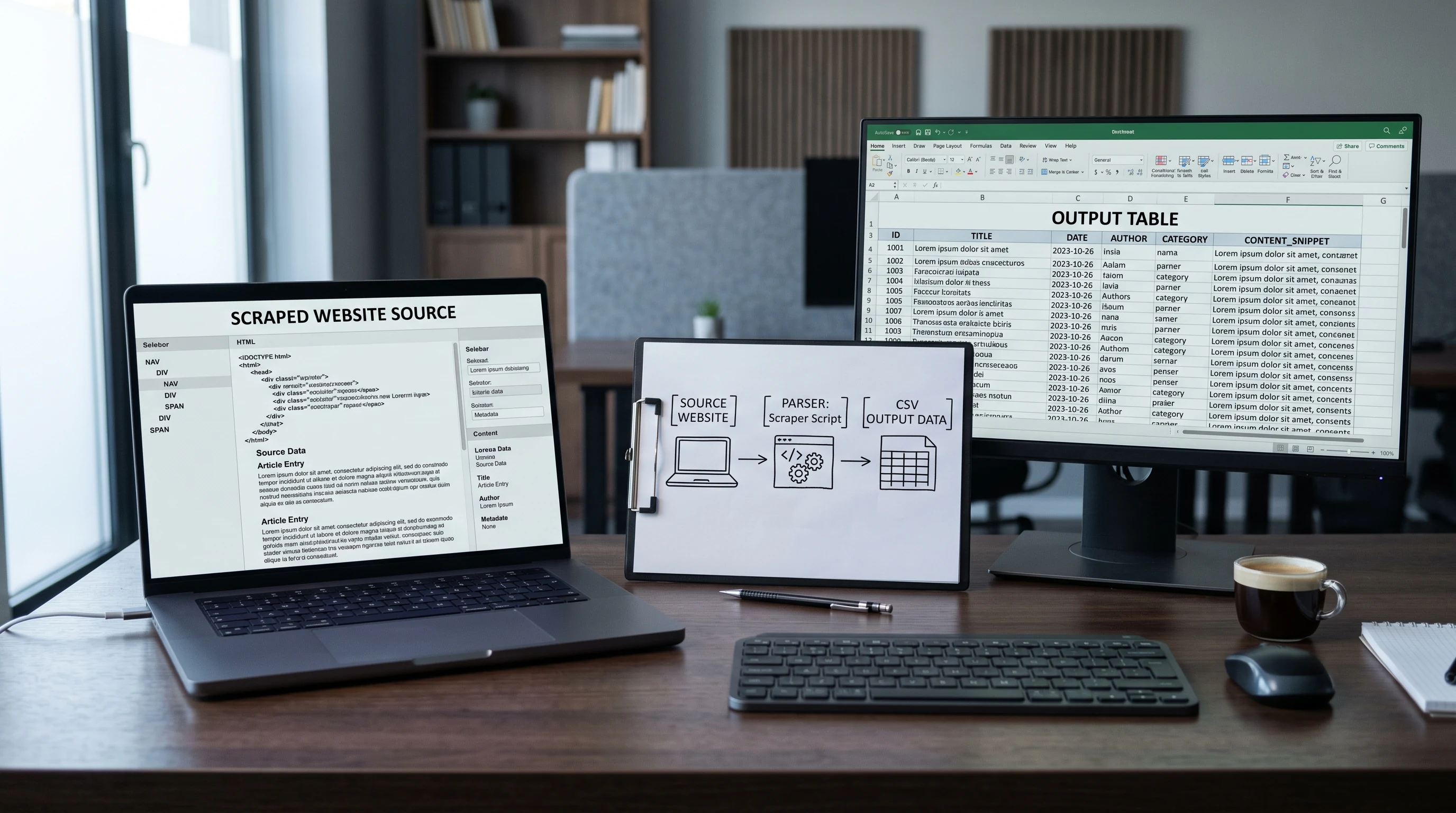
- A parser is needed not to "collect everything", but to create a specific table: products, prices, links, availability, specs, or another defined field set.
- Before ordering, check the data source, usage rules, markup stability, and export format.
- The first version is safer to test on a small page sample before running a large collection.
Who this article is for
This material is useful if you want to make a decision before work starts, not sort out details after payment.
- an online store or purchasing team that needs regular data collection
- an analyst who wants a clean table instead of manual copying
- a project owner who needs to estimate source complexity in advance
What the Topic Includes
This is not a universal checklist for decoration, but a practical set of questions to close before development or publication.
- List of sources and a check that data can be collected from them steadily.
- Export fields: name, price, link, availability, update date, specs.
- Data cleanup: consistent formats for numbers, dates, links, and empty values.
- Export to CSV, Excel, JSON, Google Sheets, or a database.
- Accuracy check on a sample before regular collection starts.
Practical Example
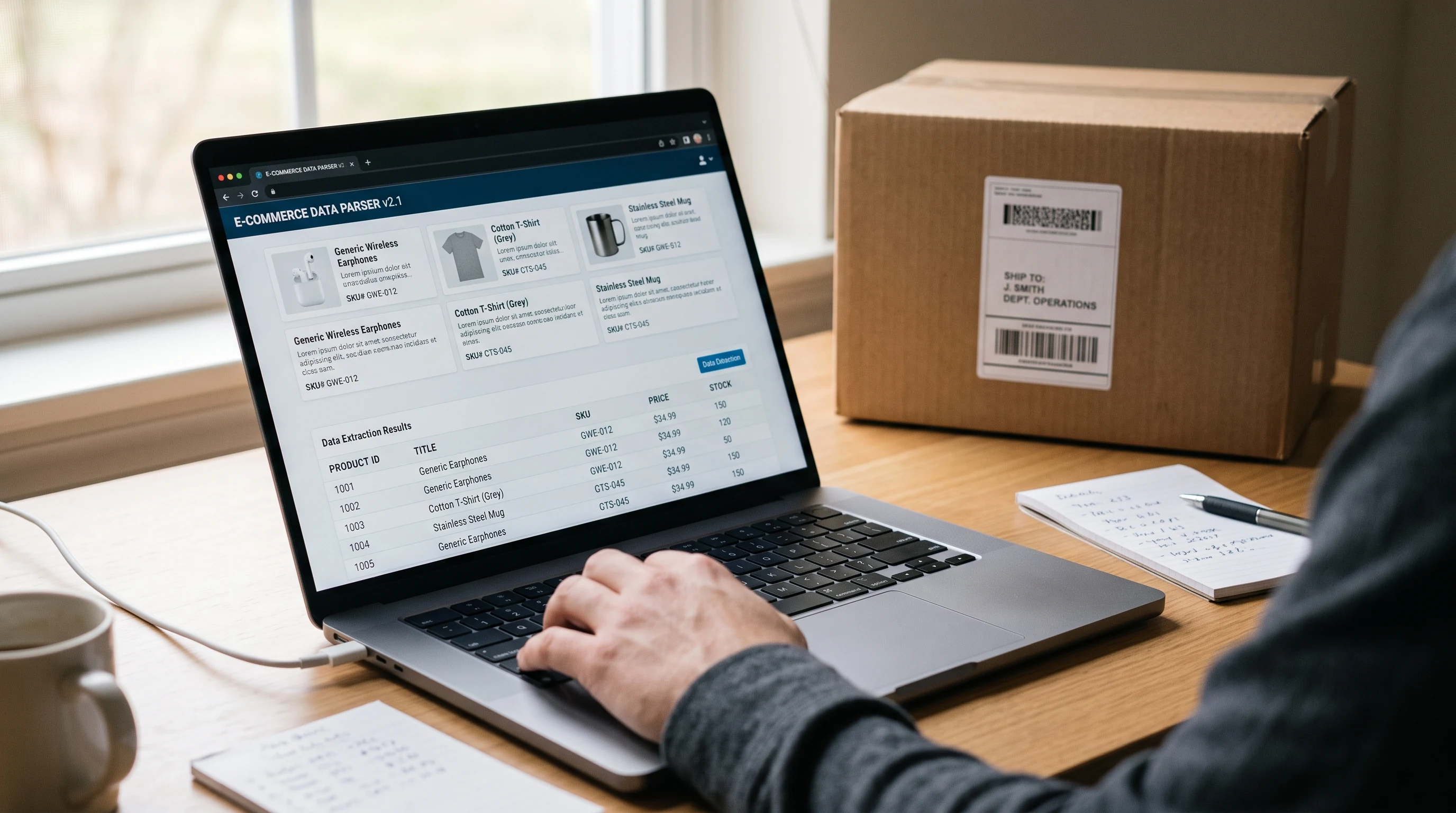
For example, an online store needs to check competitor prices once a week. A parser collects product name, price, availability, and link, normalizes the data, and exports a table. A person then checks disputed items instead of moving every row manually.
Common Mistakes
- Ordering "all data" without defining specific fields and result format.
- Not checking source rules and technical access limits in advance.
- Launching a large collection without a test sample and accuracy check.
- Not agreeing how to handle empty values, duplicates, and changed page structure.
Timeline, Price, and Limits
An exact estimate cannot be named honestly from an article title alone. But you can understand in advance what affects the work scope most.
- Complexity depends on the source, site protection, data volume, run frequency, and markup quality.
- Not every site can be automated correctly; first you need a technical check.
- Regular collection needs monitoring because the source structure can change.
Checklist Before the Start
Conclusion
The main point of "Parsing Database: what data to collect and where the limits are" is not the term itself, but a controllable result. The earlier you define the goal, input data, limits, and acceptance criteria, the lower the risk of receiving work that is formally done but does not help the business.
If the task is close to yours, start with a short description: what exists now, what should happen, and which examples you like. This is enough to suggest the first realistic step.